
New Delhi must look for formal, institutional statements issued directly from Washington rather than rely on casual pronouncements meant for local audiences, notes Ambassador Rajasekhar.

The Congress party has called on the BJP-led government to adopt a unified national approach to restore India's role as a voice for peace, criticising the government's foreign policy and its impact on India's global standing.

'The Chinese military cannot advance much in Ladakh, even if they want to.' 'Similarly, in Arunachal Pradesh, they can rename a village or two, intrude here or there, but cannot do much more realistically.'

India's Chief Economic Advisor V Anantha Nageswaran stated that the country's balance of payments (BoP) pressure is expected to remain a continuous challenge due to rising imports, commodity dependence, high global interest rates, and intense competition for capital.
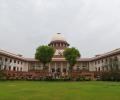
The judges questioned the government's position on arbitration, underscoring the contradiction between its resistance to enforcement and its efforts to promote India as an arbitration-friendly jurisdiction.

A 25-basis-point increase would restore some real monetary restraint when expected inflation has risen, liquidity remains easy and growth is strong, points out Amarendu Nandy.

Karat demanded that the UPA categorically spell out its stand on the International Atomic Energy Agency meeting, with regard to the Iran nuclear issue.
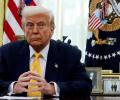
US President Donald Trump is set to engage in a series of high-profile meetings during the 81st United Nations General Assembly High-Level Week in New York, including discussions with NYC Mayor Zohran Mamdani, French President Emmanuel Macron, and Ukrainian President Volodymyr Zelenskyy.

The Swadeshi Jagran Manch (SJM) has urged the Indian government to deny permission to Elon Musk's Starlink for commercial satellite broadband services, citing national security concerns. The RSS-affiliated organisation highlighted issues with data bypassing Indian gateways and the potential for misuse by hostile actors, advocating for indigenous solutions.

US Secretary of State Marco Rubio, during his visit to Mumbai, affirmed that the US policy on weapons aid and intelligence sharing for Ukraine remains unchanged. He stated that President Donald Trump is "frustrated and angry" over false accusations of deliberately harming Ukraine and is keen on a negotiated end to the conflict. Rubio also addressed concerns about missile interceptor supplies and intelligence sharing regarding recent air strikes, attributing any issues to technical matters rather than deliberate denial. He highlighted global concerns over fuel shortages and the risk of escalation, stressing the urgent need to end the war.

Faculty recruitment is conducted directly by universities using global hiring standards while complying with Indian regulations.

India has removed a key regulatory hurdle, allowing exporters to receive payments in Indian currency while retaining incentives under the country's foreign trade policy, a move aimed at promoting wider use of the rupee in international trade.

US Secretary of State Marco Rubio stated he does not believe India and Iran are pursuing a trade deal, despite a recent meeting between their leaders. He acknowledged that many countries engage with the Iranian regime but reiterated President Trump's warning against helping Iran evade sanctions, threatening penalties for nations that do so.

It is too early to judge whether the CJP will become a consequential political movement or remain a moment of protest. Its significance will depend less on the size of crowds or the reach of online campaigns than on what follows when the initial excitement subsides, notes Manoj Mohanka.

Indian benchmark stock indices, Sensex and Nifty, closed lower due to profit-taking, a spike in wholesale price-based inflation, and firm crude oil prices, despite some support from easing intraday crude oil prices and rupee appreciation.

Indian benchmark indices, Sensex and Nifty, saw an early rebound after significant losses, driven by value buying, though elevated oil prices and anticipation of the US Federal Reserve's policy decision tempered gains. Track Sensex, Nifty on September 16.

The external affairs ministry's files, as distinct from those of the ministry of defence or the agencies, at least from before 1974 should be declassified. And if select files that are more than 40 years old are not to be declassified, the ministry should follow explicit guidelines to justify taking such a view, says Jaimini Bhagwat.

J R D Tata, chairman of the Tata group from 1938 to 1991, said that whenever he had to make a difficult decision, he would ask himself, what will be good for India, and what will be good for the Tatas. If he had a doubt, he would decide in favour of India. In the long run, it would turn out well for the Tatas too, he said, points out Arun Maira.

"Pressure on the current account is a temporary problem. Sooner rather than later, our external sector will improve," said RBI Governor Sanjay Malhotra.

India's position appears to be anchored around three red lines: Hasina's safety and the guarantee of a fair trial; assurances that Bangladeshi territory will not be used for activities hostile to India; and the restoration of an inclusive democratic process in Bangladesh.

RBI Deputy Governor Rohit Jain highlighted that banks are well-positioned to deploy $133 billion mobilised through FCNR(B) deposits, especially with strong credit demand ahead of the festival season, while also stressing the importance of robust technology governance and cyber defences in the financial sector.

India is deeply concerned by the growing consolidation of Pakistan-backed jihadi and radical Islamist groups in Bangladesh, particularly in the strategically vital Chittagong Hill Tracts, which experts warn is transforming the country into a new safe haven for these networks and posing a direct threat to India's security.

Prime Minister Narendra Modi, in bilateral talks with Chinese President Xi Jinping, emphasized that both nations must show sensitivity to each other's core issues and be guided by mutual respect, sensitivity, and interest. Modi highlighted the critical importance of peace and tranquillity along the Line of Actual Control for the development of India-China relations, while also addressing concerns regarding Taiwan and Tibet.

'The Atomic Energy Commission has approved the FDI policy and it is going in for ministerial consultations.'

Chinese foreign policy will acquire a more ideological and less pragmatic character. It will be conducted with more nationalist overtones, predicts former foreign secretary Shyam Saran.

Modi has the chance to break out of India's passive mode and firmly tell Russia that in this day and age, India will not support unilateral invasions, asserts Harishchandra Dighe.

The Congress party has alleged that convicted sex offender Jeffrey Epstein played a role in shaping the India-Israel relationship after 2014, citing email exchanges made public under the 'Epstein Files'.

'...but could demotivate employees seeking US residency.'

Leading private banks in India, including HDFC Bank, ICICI Bank, and Axis Bank, experienced a decline in net interest margins (NIMs) during the second quarter of the financial year due to significant deposit mobilisation under the Foreign Currency Non-Resident (Bank), or FCNR (B), scheme. However, banks anticipate a recovery in margins in the coming quarters as these funds are deployed and the interest-rate cycle supports lending yields.

'It beggars belief that Saudi Arabia would deploy military force against India, a top partner and market.'

If the new MDR regime is rolled out from the middle of this month, as scheduled, it should count as one of the boldest political actions by the Modi government on an economic-policy issue, and a signal that it is less worried about erosion of political capital it draws from one of its key constituencies, notes A K Bhattacharya.

Moody's Ratings has sharply increased India's GDP growth forecast for fiscal 2026-27 to 7 per cent, making it the fastest among G20 economies, driven by economic resilience despite the Middle East conflict. However, the agency flagged significant inflation risks stemming from elevated oil prices and potential El Nino disruptions.
The idea of India under compulsion harmonising its foreign policy with the US global strategies -- militates other powers. Which is why Iran becomes a test case. The world watches us, and it takes us seriously. We shouldn't appear as one-dimensional men.

The Finance Ministry has refuted allegations that US pressure influenced the decision to levy a 0.4 per cent Merchant Discount Rate (MDR) on select UPI payments. The ministry clarified that the NPCI guidelines prioritise RuPay credit cards on UPI to promote domestic alternatives and ensure a self-sustaining revenue model for smaller domestic companies, countering claims of favouring foreign payment providers.

Former Chief Economic Adviser Krishnamurthy V Subramanian outlines India's strategy to become a USD 55 trillion economy by 2047. The plan hinges on leveraging its young demographic in AI, dominating sunrise sectors like space and defence tech, attracting FDI, and achieving sustained 8% GDP growth.

Inflows into non-resident Indian (NRI) deposit schemes decreased by 23.24 per cent to $2.78 billion during the first quarter of FY27, down from $3.61 billion in the previous year, according to Reserve Bank of India (RBI) data.

Indian benchmark indices, Sensex and Nifty, traded marginally higher in early trade despite the US Federal Reserve's recent rate hike and indications of further tightening, with the National Stock Exchange's much-anticipated Rs 22,569-crore IPO also opening for subscription.

The Indian stock market experienced a significant downturn, with the Sensex crashing over 1,000 points and the Nifty hitting a fresh 52-week low, driven by sustained selling from foreign institutional investors, the RBI's monetary policy tightening, and elevated Brent crude prices.

It is time the political leaderships in this country arrived at a common ground over issues of foreign and security policy concerns. There has to be a greater communication between the government and the Opposition leaderships for the nation to present a unified face against the rest of the world, advises N Sathiya Moorthy.
